
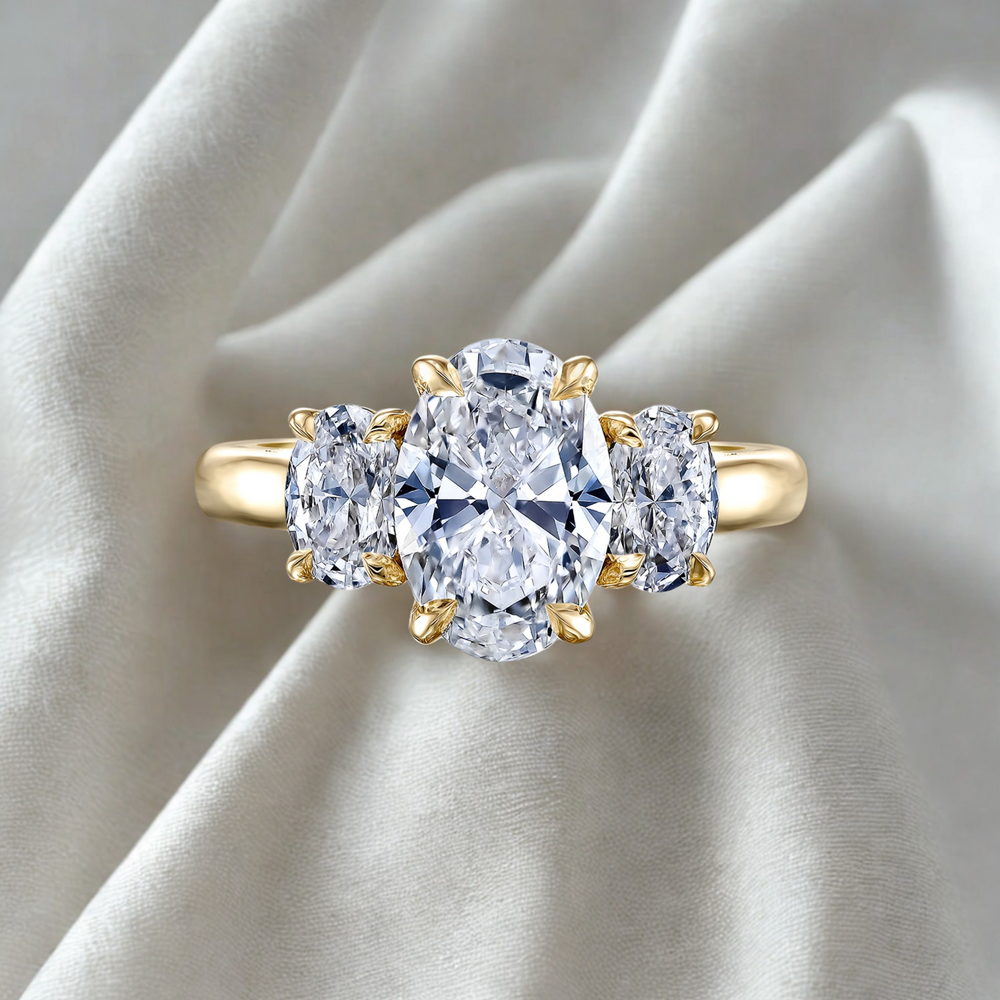
Can a diamond chip or break?
Yes, a diamond can chip or break, even though it is the hardest gemstone used in jewelry.
That usually surprises people because diamonds are often described as “indestructible.” In reality, diamonds are extremely resistant to scratching, but they are not immune to impact. Under the right conditions — especially around sharp corners or exposed edges — a hard hit can cause damage.
At Simone & Son, many clients come in after years of wearing their engagement ring daily without issue, then suddenly notice:
-
a tiny sharp edge,
-
a change in how the stone reflects light,
-
or a small chip they cannot remember causing.
And honestly, the moment that caused the damage is often much less dramatic than people expect:
-
striking a countertop while unloading groceries,
-
catching the ring against gym equipment,
-
hitting the steering wheel,
-
or dropping the ring onto tile.
The important distinction is not whether diamonds can chip.
They can.
The more useful question is:
“What actually makes a diamond vulnerable in real life, and how do you avoid the situations that usually lead to damage?”
That is where the decision-making becomes much more practical.
Why Some Diamonds Are More Vulnerable Than Others
One of the biggest misconceptions is assuming all diamonds carry the same durability simply because they are diamonds.
In reality, shape and setting design change everything.
For example, round brilliant diamonds tend to handle everyday wear exceptionally well because they do not have exposed corners. Shapes with pointed edges behave differently.
Diamond Shapes That Require More Protection
|
Diamond Shape |
Most Vulnerable Area |
|
Pear Shape |
Pointed tip |
|
Marquise |
Both pointed ends |
|
Princess Cut |
Sharp corners |
|
Heart Shape |
Cleft and points |
|
Oval |
Ends of the stone |
|
Round Brilliant |
Lowest overall vulnerability |
This becomes especially noticeable once someone begins wearing the ring daily rather than only occasionally.
We often see clients gravitate toward elongated shapes because they love the elegance and finger coverage, then naturally shift the conversation toward:
-
durability,
-
setting protection,
-
and long-term wearability.
That is usually where the setting matters just as much as the diamond itself.
The Kind Of Impact That Usually Causes Chips
Most diamond chips are not caused by gradual wear.
They happen because of concentrated force in a very specific spot.
Interestingly, many people expect damage to happen during something major, but most of the situations we see are surprisingly ordinary:
-
reaching into a car console,
-
lifting weights,
-
carrying luggage through an airport,
-
stacking cookware,
-
moving furniture,
-
or accidentally hitting the ring against stone or metal surfaces.
And in many cases, people do not realize the exact moment it happened.
They simply notice later that:
-
the ring catches fabric differently,
-
one edge feels sharper,
-
or the diamond suddenly reflects light unevenly.
Expert Tip
The vulnerable part of a diamond is usually not the top surface people see first.
It is often:
-
the girdle,
-
the corners,
or the pointed edges where impact concentrates force most aggressively.
Why Setting Style Changes Durability So Much
This is one of the biggest turning points during engagement ring appointments.
Someone may fall in love with a diamond shape immediately, then start thinking realistically about:
-
work,
-
travel,
-
gym routines,
-
gloves,
-
children,
or how often the ring will actually be worn.
That is usually where setting structure becomes part of the decision.
For example:
-
V-prongs help protect pointed diamonds,
-
bezel settings shield edges more completely,
-
while very open solitaire settings expose more of the stone.
This does not automatically make open settings a poor choice. Many people prefer them because they allow more light into the diamond and create a cleaner appearance.
But realistically, people with highly active daily routines often appreciate a little more protection once they think beyond the initial proposal moment.
The Detail People Usually Overlook: Inclusion Placement
This is where diamond selection becomes much more nuanced than simply reading clarity grades online.
Two diamonds with identical clarity grades can behave very differently structurally depending on where the inclusion sits.
For example:
-
a feather near the point of a pear shape,
-
or an inclusion close to the corner of a princess cut,
-
may create more vulnerability than a small inclusion safely positioned elsewhere.
At Simone & Son, we often see people focus heavily on achieving higher clarity grades while overlooking how much inclusion placement matters once the diamond is worn in real life.
That perspective usually changes quickly once diamonds are compared naturally rather than theoretically.
From The Jeweler’s Bench
Over the years, one thing becomes very clear: most chipped diamonds did not belong to careless people.
They belonged to people who genuinely loved and wore their rings constantly.
That distinction matters because engagement rings are not static objects. They move through:
-
kitchens,
-
offices,
-
beaches,
-
airports,
-
gyms,
and everyday routines.
The rings that perform best long term are usually the ones designed around how someone actually lives.
What People Usually Regret Later
Interestingly, people rarely regret choosing a durable setting.
What tends to happen more often is:
-
selecting a very delicate setting without considering daily wear,
-
prioritizing openness over protection,
-
or underestimating how frequently the ring will encounter hard surfaces.
This becomes especially important in Orange County because many people live very active lifestyles year-round:
-
beach environments,
-
outdoor activities,
-
fitness routines,
-
and frequent travel all affect how jewelry wears over time.
Those lifestyle patterns naturally influence which designs hold up most comfortably long term.
What To Do If You Think Your Diamond Chipped
The first step is usually very simple: stop wearing the ring until it is inspected properly.
Many people continue wearing the ring because the chip appears small initially. Unfortunately, that can sometimes worsen:
-
loose prongs,
-
pressure points,
-
or edge fractures.
If possible:
-
store the ring separately,
-
avoid aggressive cleaning,
-
and avoid additional impact until the stone can be examined professionally.
In many cases, small issues are significantly easier to address when caught early.
Design Insight
Some engagement rings photograph beautifully.
Others wear beautifully.
The strongest long-term designs usually balance both.
That balance tends to matter much more after several years of ownership than people expect at the beginning.
How People’s Priorities Usually Change During Ring Shopping
One of the most interesting shifts happens once someone stops thinking only about:
“What looks best today?”
…and starts asking:
“What will still feel practical, secure, and beautiful after years of wear?”
That is usually where the conversation changes from:
appearance,
to:
-
longevity,
-
maintenance,
-
comfort,
-
and realistic durability.
And that is often when the best decisions get made.
Simone & Son’s Perspective On Diamond Durability
Diamonds are remarkably durable gemstones, but they are still part of fine jewelry meant to move through everyday life with you.
At Simone & Son in Huntington Beach, many clients become much more confident in their engagement ring decisions once they begin evaluating:
-
shape,
-
setting protection,
-
daily wear habits,
-
and long-term practicality together rather than separately.
Because ultimately, the goal is not simply choosing a beautiful diamond.
It is choosing a ring that continues feeling secure, wearable, and elegant long after the excitement of the proposal becomes part of everyday life.


