
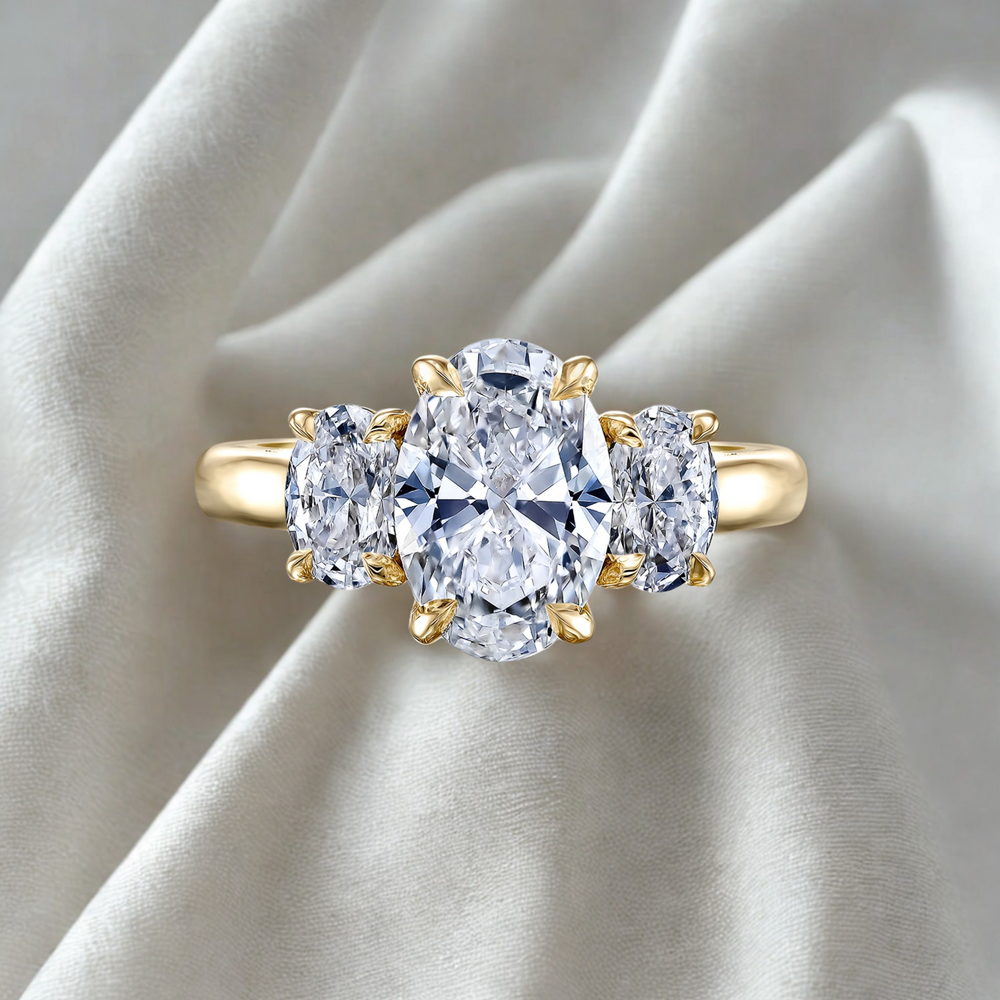
Can diamond rings get scratched?
Yes, diamond rings can get scratched, but the answer is often different from what most people expect.
One of the most common concerns people bring to us is that their diamond appears scratched after years of wear. In reality, the diamond itself is rarely the source of the problem. More often, the scratches are on the ring's metal, buildup has accumulated around the stone, or a small chip is being mistaken for a scratch.
Diamonds are extraordinarily resistant to scratching, but a diamond ring is made of more than just a diamond. Understanding which parts of the ring are vulnerable to wear—and which signs of wear are perfectly normal—can help you protect a piece you wear every day and avoid unnecessary worry.
What Usually Gets Scratched On A Diamond Ring?
When examining rings that have been worn daily for years, the metal almost always tells the story first.
The diamond often looks remarkably similar to the day it was purchased, while the setting shows evidence of everyday life. Small surface scratches, softened edges, and areas of wear are common on gold and platinum rings because precious metals are much softer than diamonds.
This surprises many people.
A ring can look noticeably worn while the center diamond remains virtually unchanged.
That is because diamonds rank 10 on the Mohs Hardness Scale, making them highly resistant to scratches from everyday objects. Gold and platinum, however, naturally develop surface wear over time.
The important thing to remember is that these marks are not necessarily damage. In many cases, they are simply signs that the ring is being enjoyed as intended.
Most Common Signs Of Wear On A Diamond Ring
|
Issue |
How Common? |
What To Do |
|
Metal Scratches |
Very Common |
Normal wear; polish when desired |
|
Dull Appearance |
Very Common |
Professional cleaning usually helps |
|
Loose Or Worn Prongs |
Common |
Schedule an inspection |
|
Bent Prongs |
Common |
Have a jeweler evaluate the setting |
|
Diamond Chip |
Uncommon |
Seek professional repair promptly |
|
Loose Diamond |
Rare But Serious |
Stop wearing the ring and have it checked |
|
Diamond Scratch |
Very Rare |
Have the stone professionally assessed |
From The Jeweler's Bench
Some of the most cherished rings we see have visible wear on the metal. The scratches often reflect years of anniversaries, family milestones, travel, and everyday moments rather than neglect.
Can A Diamond Itself Get Scratched?
Yes, but it is uncommon.
A diamond can only be scratched by something equally hard or harder. In practical terms, that means another diamond is usually the biggest concern.
This is one reason jewelers store loose diamonds separately and handle them carefully during repairs and setting work.
For most people, the greater risk is not scratching the diamond but mistaking another issue for a scratch.
A diamond that suddenly appears dull, cloudy, or marked is frequently affected by residue, lotion buildup, soap film, or debris underneath the stone.
Before assuming the worst, a professional cleaning is often the best first step.
Why Do So Many People Think Their Diamond Is Scratched?
A pattern we frequently notice is that concern often starts with a change in sparkle.
Someone looks down one day and notices their diamond doesn't appear quite as bright as it once did. Naturally, the first thought is that something has happened to the stone.
Most of the time, the explanation is much simpler.
Diamond rings collect residue surprisingly quickly. Sunscreen, hand lotion, soap, makeup, and everyday oils can accumulate beneath the stone and along the setting.
For many Huntington Beach clients, beach days, outdoor activities, and year-round sun exposure create additional opportunities for products to build up on jewelry.
The result is a diamond that appears less brilliant despite being completely undamaged.
Care Tip
If your diamond suddenly appears cloudy, have it professionally cleaned before assuming it has been scratched. The difference can be dramatic.
Why Some Rings Show Wear Faster Than Others
Two people can own identical diamond rings and see very different levels of wear after a year.
The difference often comes down to lifestyle.
We regularly see rings worn through workouts, gardening projects, home renovations, sports, travel, and long days at the office. Each activity leaves its own signature on the metal.
Someone who removes their ring before lifting weights or working with tools may see very little visible wear.
Someone who keeps their ring on for every activity may notice scratches develop more quickly.
Neither approach is necessarily right or wrong.
The key is understanding how daily habits affect the ring so you can make informed decisions about when to wear it and when to give it a break.
Can Everyday Activities Damage A Diamond Ring?
The metal can absolutely be affected by everyday activities.
The diamond is usually not the concern.
Activities that commonly create wear include:
-
Weightlifting
-
Gardening
-
Home improvement projects
-
Carrying heavy objects
-
Recreational sports
-
Frequent contact with hard surfaces
Many people expect damage to come from a single dramatic event. More often, wear develops gradually through repeated contact over months and years.
A practical rule we often share is simple: if an activity places significant pressure on your hands, consider removing your ring beforehand.
When Should You Actually Be Concerned?
Most surface scratches are cosmetic.
Certain signs deserve closer attention.
Consider having your ring inspected if you notice:
-
A rough or jagged area on the diamond
-
A visible nick near the edge of the stone
-
A loose diamond
-
Bent prongs
-
Deep grooves in the metal
-
A sudden change in the ring's overall appearance
Many repairs are straightforward when caught early.
Waiting often turns a simple adjustment into a more significant repair.
That is one reason routine inspections remain one of the most valuable services a jeweler can provide.
The Difference Between A Scratch And A Chip
This distinction causes confusion more often than almost any other jewelry topic.
A scratch is typically a surface mark.
A chip involves the loss of material from the diamond itself.
While scratches on diamonds are rare, chips can occur if a diamond receives a sharp impact in a vulnerable area, particularly along a pointed corner or exposed edge.
Certain shapes, such as pear, marquise, princess, and heart-shaped diamonds, may require additional protection because of their pointed areas.
Fortunately, proper setting design greatly reduces this risk.
A Perspective We Have Developed Over The Years
One thing decades in the jewelry industry teaches you is that people often worry about the wrong things.
Many assume a scratch-free ring is a well-cared-for ring.
In reality, some of the most carefully maintained rings we see show signs of wear simply because they are worn and loved every day.
The questions that matter most are not:
"Does my ring have a few scratches?"
They are:
-
"Is my diamond secure?"
-
"Is my setting structurally sound?"
-
"Is the ring being maintained properly?"
Those are the factors that determine whether a ring will continue to be enjoyed for generations.
How To Keep Your Diamond Ring Looking Beautiful
Most long-term ring care comes down to consistency rather than perfection.
A few simple habits make a significant difference:
-
Remove your ring during heavy manual work.
-
Store jewelry pieces separately.
-
Clean your ring regularly.
-
Schedule professional inspections.
-
Address loose prongs promptly.
-
Avoid exposing jewelry to harsh chemicals whenever possible.
These small habits help preserve both the appearance and integrity of your ring over time.
Conclusion
Diamond rings can get scratched, but in most cases, the scratches people notice are on the metal rather than the diamond itself. Diamonds are remarkably resistant to scratching, although chips, abrasions, and other forms of wear can still occur under certain circumstances.
More importantly, a few signs of wear are not a sign that something is wrong.
A diamond ring that accompanies you through everyday life will naturally develop a history of its own. The goal is not to prevent every mark. It is to ensure the ring remains beautiful, secure, and ready for the next chapter.
Whether your ring simply needs a professional cleaning or you have concerns about potential damage, having it evaluated by an experienced local jeweler can provide clarity and peace of mind. At Simone & Son, we have spent decades helping Orange County families care for the jewelry that marks life's most meaningful moments, and we believe confidence starts with understanding exactly what you're seeing when you look down at your ring.


