
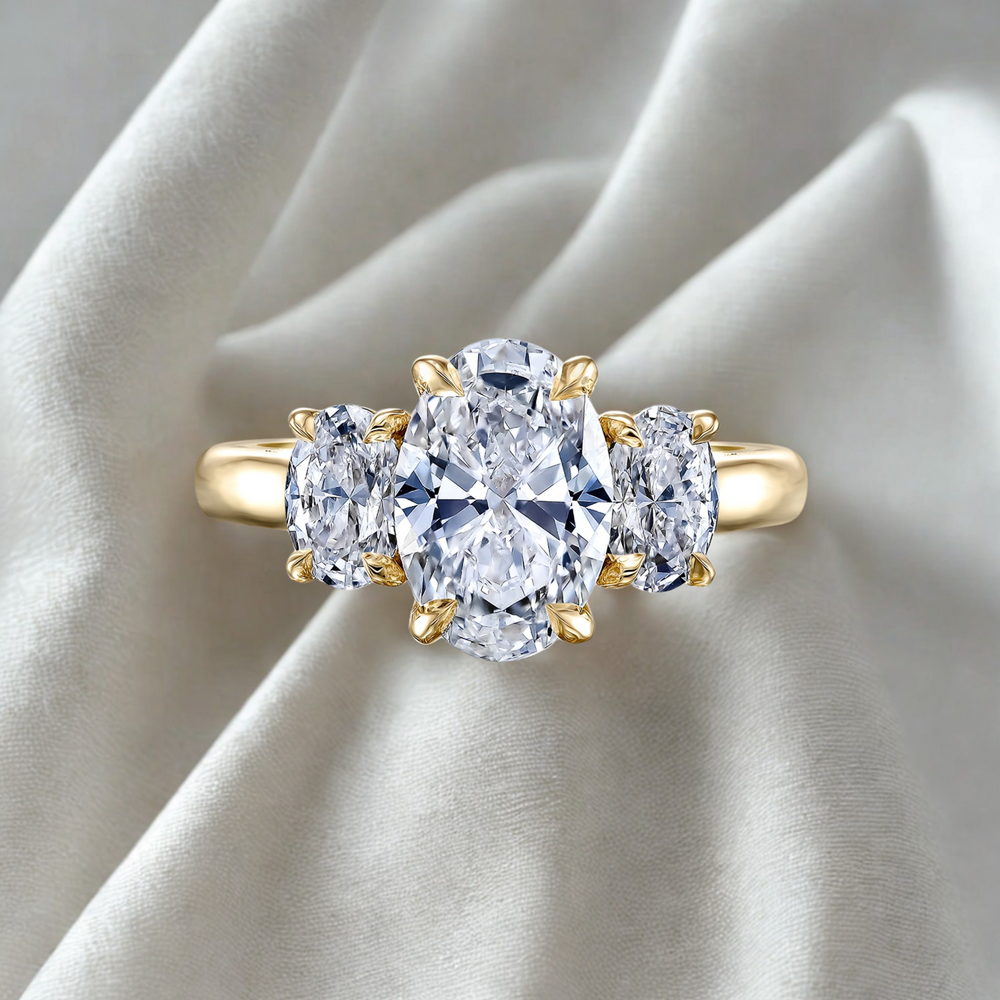
Can diamonds break?
Yes, diamonds can break. Diamonds are the hardest natural material, which means they resist scratching better than any other gemstone, but hardness does not make them indestructible. A diamond can chip, crack, or break if it is hit at the right angle, especially along a vulnerable edge, point, or natural internal feature.
This is one of the most important things to understand if you wear a diamond engagement ring every day. Your diamond is incredibly durable, but it still needs thoughtful care. At Simone & Son, we often explain it this way: a diamond can handle a lifetime of love, but it should not be treated like it cannot be harmed. The right setting, regular inspections, and smart everyday habits help protect both the diamond and the story it represents.
Why Diamonds Are Hard But Not Unbreakable
Diamonds are famous for being hard.
That means they are very resistant to scratching. If you wear a diamond ring every day, the diamond itself will usually resist surface wear far better than many other gemstones.
But hardness is not the same as toughness.
Hardness means resistance to scratches. Toughness means resistance to breaking, chipping, or cracking from impact.
A diamond can be hard and still have points of vulnerability. If it receives a sharp blow in the wrong place, especially near an exposed edge, pointed corner, or thin girdle, it can chip or fracture.
You may see this most often in diamond shapes with delicate points, such as:
-
Princess cut diamonds
-
Pear shaped diamonds
-
Marquise diamonds
-
Heart shaped diamonds
-
Emerald cut diamonds with exposed corners
-
Radiant cut diamonds with thin edges
This does not mean those shapes are poor choices. It simply means the setting should be designed to protect the diamond properly.
How Can A Diamond Break?
A diamond usually breaks from impact, pressure, or an existing weak point.
Most chips happen during everyday activities, not dramatic accidents. A ring may hit a granite countertop, gym weight, car door, tile floor, metal railing, or another hard surface.
Sometimes the diamond does not break immediately. A small chip may form first. Over time, if the ring continues to be worn without inspection, the damage may worsen.
Common causes include:
-
Hitting the ring against a hard surface
-
Dropping the ring onto tile or stone
-
Wearing the ring during workouts
-
Wearing the ring while cleaning or gardening
-
Loose prongs that expose an edge
-
A setting that does not protect the diamond’s corners
-
A previous chip or fracture that was not repaired
-
Heavy pressure from lifting or gripping objects
In Orange County, where clients often move between work, the gym, beach weekends, family life, and social events, engagement rings go through more than people realize. The diamond may be strong, but the ring still needs care that matches your lifestyle.
Gem Fact
A diamond’s crystal structure has natural directions where it can split more easily under force. Jewelers consider this when evaluating risk, setting style, and vulnerable areas of the stone.
Can A Diamond Chip Even If It Is Real?
Yes. A real diamond can chip.
In fact, the idea that a diamond cannot chip is one of the most common misunderstandings in jewelry care.
A chipped diamond does not mean the stone was fake. It usually means the diamond experienced impact or pressure at a vulnerable point.
This is especially important for engagement rings because they are worn daily. Your ring touches everything your hand touches. Even careful people can accidentally hit a diamond against a hard surface.
If you notice a new rough spot, white mark, uneven edge, or change in sparkle, stop wearing the ring and have it checked.
Do not continue wearing it just because the diamond is still in place. If the chip is near a prong, girdle, or corner, the stone may be less secure than it looks.
Diamond Breakage Risk Guide
Use this guide to understand which situations deserve extra caution.
|
Situation |
Risk Level |
What You Should Do |
|
Wearing A Ring To Dinner |
Low |
Enjoy it, then clean as needed |
|
Working At A Desk |
Low To Moderate |
Be mindful of hard edges and metal surfaces |
|
Lifting Weights |
High |
Remove your ring first |
|
Cleaning With Chemicals |
High |
Remove your ring and protect the setting |
|
Gardening |
High |
Remove your ring before digging or gripping tools |
|
Beach Or Pool Days |
Moderate To High |
Leave valuable rings safely stored |
|
Wearing A Loose Setting |
High |
Stop wearing it until inspected |
|
Thin Or Exposed Diamond Corners |
Moderate To High |
Choose protective prongs or a bezel |
|
Dropping A Ring On Tile |
High |
Have it inspected even if it looks fine |
This chart is not meant to make you nervous. It is meant to help you make better choices before damage happens.
Which Diamond Shapes Are More Likely To Chip?
Any diamond can chip, but certain shapes need more protection.
Diamonds with pointed corners or sharp ends are more vulnerable because those areas can absorb impact directly.
Princess Cut Diamonds
Princess cut diamonds have sharp corners. A well-made setting should protect each corner with secure prongs.
Pear And Marquise Diamonds
Pear and marquise diamonds have delicate tips. These tips should be protected with a V-prong or another secure design.
Emerald And Radiant Cut Diamonds
Emerald and radiant cuts have corners that should be well supported. Cropped corners help, but they still need proper setting protection.
Round Brilliant Diamonds
Round diamonds have no sharp corners, which makes them less prone to corner chipping. Still, they can chip along the edge if hit hard enough.
From The Jeweler’s Bench
The setting is part of the diamond’s protection system. A beautiful diamond in the wrong setting may be more vulnerable than a more delicate-looking diamond in a thoughtfully built design.
How Do You Protect A Diamond From Breaking?
The best protection is a mix of smart design and good habits.
First, choose a setting that suits the diamond shape. If your diamond has corners or points, make sure the setting protects them. If you have an active lifestyle, consider a lower-profile setting or stronger prong structure.
Second, know when to take the ring off.
Remove your diamond ring before:
-
Lifting weights
-
Cleaning
-
Gardening
-
Moving furniture
-
Swimming
-
Applying thick lotion or sunscreen
-
Rock climbing
-
Doing hands-on work
-
Sleeping, especially if the setting is delicate
Third, have your ring checked regularly. A prong can lift slightly without you noticing. A stone can loosen before it moves enough for you to feel it.
At Simone & Son, we recommend regular inspections for engagement rings and wedding rings, especially custom-designed pieces that are worn every day.
What Should You Do If You Think Your Diamond Chipped?
If you think your diamond chipped, stop wearing the ring.
Place it in a safe container or jewelry box and bring it to a jeweler for inspection. Do not clean it aggressively, press on the stone, or try to smooth the rough spot yourself.
A jeweler can evaluate:
-
Whether the diamond is chipped
-
Where the damage is located
-
Whether the setting is still secure
-
Whether the diamond can be reset
-
Whether recutting is possible
-
Whether repair or replacement makes more sense
Sometimes a small chip can be hidden under a prong. Sometimes the diamond may need to be reset. In more serious cases, the stone may need replacement.
The right answer depends on the diamond, the setting, and the meaning of the piece.
Care Tip
If your ring takes a hard hit, have it inspected even if nothing looks wrong. Damage is not always visible from the top, especially near prongs or the girdle.
Can A Broken Diamond Be Repaired?
Sometimes, but not always.
A diamond cannot be “glued” back together in a way that restores it to its original condition. But depending on the damage, a jeweler may be able to help you find a good solution.
Possible options include:
-
Resetting the diamond to cover a small chip
-
Recutting or repolishing the stone
-
Replacing the diamond
-
Reworking the design
-
Using the damaged diamond in a different type of jewelry
For sentimental pieces, the solution is not always just technical. It is emotional too.
If the diamond is part of an engagement ring, anniversary piece, or family heirloom, we take time to talk through what matters most: preserving the original stone, protecting the design, or creating something new while honoring the story.
Do Lab-Grown Diamonds Break Too?
Yes. Lab-grown diamonds can chip or break too.
Lab-grown diamonds have the same basic physical properties as natural diamonds, including hardness. That also means they are not indestructible.
The same care rules apply.
Whether your diamond is natural or lab-grown, the shape, setting, and daily wear habits all matter. A lab-grown diamond in a delicate setting still needs protection. A natural diamond with an exposed corner still needs care.
The better question is not only what kind of diamond it is, but how it will be worn.
The Simone & Son Perspective On Diamond Durability
We believe jewelry should be worn, celebrated, and lived in.
But we also believe the best jewelry is designed with real life in mind.
As a family-owned jeweler with decades of experience and in-house craftsmanship, Simone & Son helps clients create custom engagement rings, wedding bands, and meaningful fine jewelry crafted in Orange County. Our process includes more than choosing a diamond. We think carefully about the setting, stone shape, lifestyle, comfort, and long-term care.
A ring should be beautiful on the day you receive it.
It should also be built with the years ahead in mind.
That is why we pay close attention to details like prong placement, stone security, CAD design, metal choice, and how the ring will feel in daily wear. Your story deserves that level of care.
Keep Your Diamond Safe For A Lifetime
So, can diamonds break? Yes. Diamonds are incredibly hard, but they can still chip, crack, or break if struck in the wrong way.
That does not mean you should be afraid to wear your diamond. It means you should wear it wisely.
Choose a protective setting, remove your ring during high-risk activities, and have it inspected regularly. Those simple habits can help your diamond stay secure and beautiful for years.
If you have questions about a chipped diamond, engagement ring inspection, custom engagement rings in Orange County, or custom wedding bands, we would be honored to help.
Visit Simone & Son at 10124 Adams Ave, Huntington Beach, CA 92646, call (714) 964-4012, or email info@simoneandson.com.
Let’s design something unforgettable—crafted with care, meaning, and confidence.


